
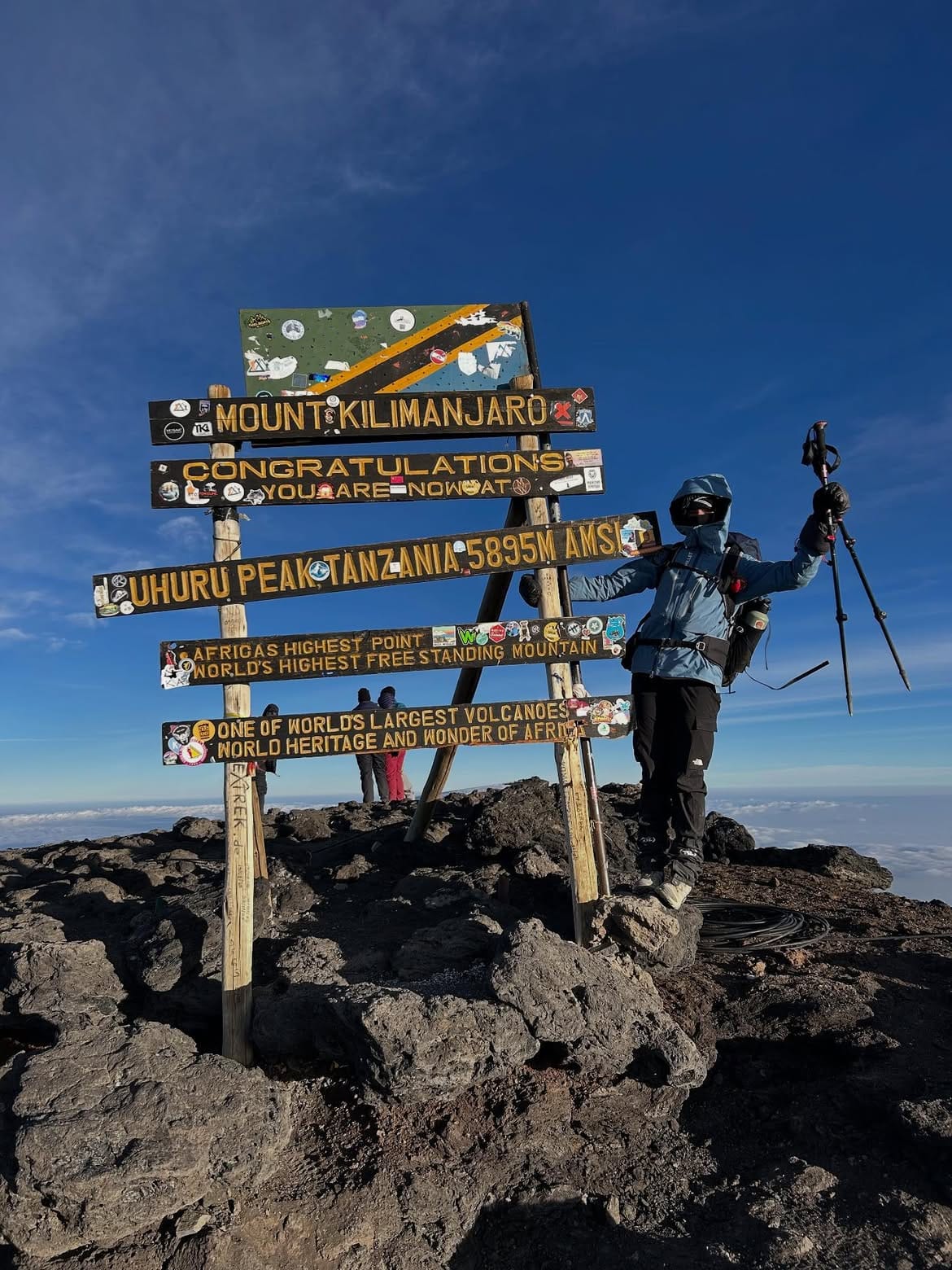
A walk to 5,895 metres, not a technical climb.
Kilimanjaro is the highest mountain in Africa and the tallest free-standing mountain in the world. Uhuru Peak sits at 5,895 metres, and the trek to it crosses five climate zones in under a week: farmland, rainforest, heather and moorland, alpine desert, then the arctic ground of the summit.
No ropes, ice axes or climbing experience are needed. What the mountain asks for is time. Altitude, not terrain, is what turns people back, and the single biggest decision you make is how many days you give your body to adjust.
This guide covers the routes and how they differ, what a day on the mountain looks like, when to go, what it costs, how to train, and how we manage altitude and safety on our climbs.
Six ways up, and one night in the crater.
Every route ends at Uhuru Peak. They differ in length, gradient, scenery, traffic and where you sleep. Longer profiles acclimatise better and summit more reliably.
{{ activeRoute.nick }}
{{ activeRoute.body }}
How hard is it, honestly?
Fit walkers with no mountain experience summit Kilimanjaro every week of the season. The difficulty sits in three places, and all three can be planned for.
{{ h.q }}
{{ h.a }}
What a day actually looks like.
Days follow the same shape whichever route you walk. You carry a daypack; porters carry everything else. Walking is deliberately slow, four to six hours on most days, longer on the two big ones.
Your guide checks oxygen saturation and pulse morning and evening, and briefs the following day over dinner. Bottled oxygen and a full medical kit travel with the crew on every climb, for emergencies rather than routine use.
See the route itineraries →Six things to settle first.
{{ p.q }}
{{ p.a }}
Kilimanjaro on paper.
Questions we are asked most.
{{ f.q }}
{{ f.a }}
Tell us your dates and your walking history. We will recommend a route.
Private climbs on every route, departing any day of the year. We hold your place while permits and hotels are confirmed.